A Contested Election?

Dust, Drought, Depression, and War No. 5

Huey Long and the Louisiana National Guard akvisIn the 1934 mayoral election in New Orleans, Senator Huey P. Long1, the Democratic political leader of Louisiana convinced John Klorer, Sr., a respected engineer and father of the editor of Long’s American Progress newspaper, to oppose the incumbent mayor, T. Semmes Walmsley.

In the final days of the campaign, Long supporters were caught removing names of Old Regular supporters from the voter rolls, so the registration books were seized by the civil sheriff and placed in the Orleans Parish Prison for safekeeping. Long’s ally Governor Oscar K. Allen ordered the Louisiana National Guard to mobilize for New Orleans to defend the registrar’s office, while Walmsley threatened to deputize ten thousand “special police.” With potential armed clashes between the National Guard and Walmsley’s police looming, a last-minute agreement to submit to an arbitration committee averted a crisis.2

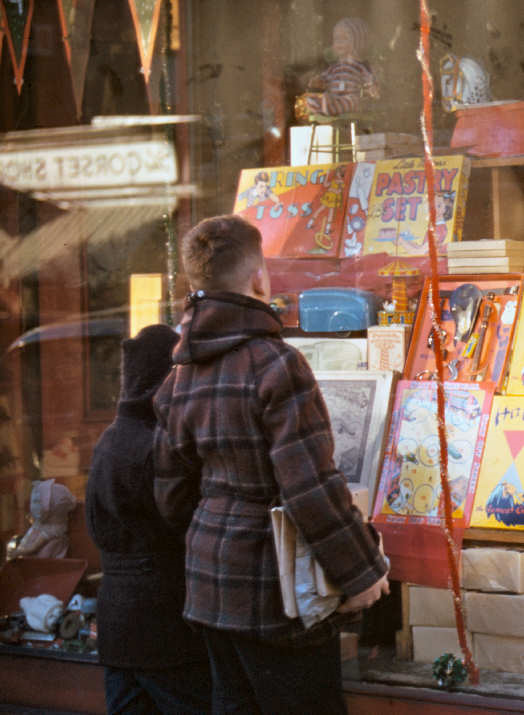
The following article appeared in the New York Times on September 8, 1934.3  The image above is a composite from public domain photos.

2,000 Troops Move Into New Orleans; Long Is ‘Dictator’
_____________________
But His Faction Loses Two Important Court Rulings Covering Primary.
_____________________
Senator Is Threatened
_____________________
Father Says if His Soldier Son Is Hurt He Will Kill Long as He Would Any ‘Mad Dog.’
_____________________
By F. Raymond Daniell.
Special to The New York Times.
NEW ORLEANS, Sept. 7.—By virtue of the twenty-seven laws passed by the Legislature in special session last month, Senator Huey P. Long became the de facto dictator of this State at noon today and immediately began acting the part.
Between 2,000 and 2,500 militia-men—the entire strength of the Louisiana National Guard—were quartered within the city tonight, awaiting the next move of the Senator in his effort to crush the political faction of Mayor T. Semmes Walmsley and win the primary election next Tuesday.
The troops came from eighteen towns and cities and moved here by train and motor bus to take part in a political feud as bizarre as any that has enlivened the American scene in many a year.
The troops were bivouacked at Jackson Barracks and in the State-owned docks along the Mississippi. They arrived quietly and the average citizen would have been un-aware of their advent had it not been for newspaper headlines. No attempt was made to take over any of the civil functions.
The Senator’s program for reforming the city and guaranteeing it a pure election according to his lights struck a snag today when Federal Judge Wayne G. Borah issued a temporary injunction to restrain R. J. Gregory of the registry of voters from scratching any name from the list of voters between this time and next Tuesday, primary day.
Senator Long has charged that the rolls have been padded by his opponents.

Protest Calling of Troops.

Meanwhile, a movement was stared in Monroe to enlist the fathers and mothers of the “schoolboy soldiers” in a protest to President Roosevelt against Governor O. K. Allen’s action in mobilizing the National Guard, including many youthful members who, in a short time, should be back in high school.
A committee headed by Harvey W. Truesdale and Judge S. L. Digby of Monroe has telegraphed al-ready to Governor Allen and Senator Long that they will be held r-sponsible “if a single boy is injured as a result of the call to the Louisiana National Guard for the armed service in New Orleans.”
Alfred D. Meant, a Baton Rouge business man, also sent a telegram to Senator Long promising to kill the Senator “as I would any other mad dog,” if his son, Thomas, one of the soldiers, were harmed in any way.
“My son, Thomas Harris St. Amant, is a member of Company A 156th Infantry, now mobilizing at Baton Rouge,” he wired. “This is to notify you that should any harm or injury come to him as a result of this mad effort of yours, either by accident or otherwise, I will personally kill you as I would any other mad dog.”
Meanwhile around the Vieux Carre in the French quarter the streets were full of strolling soldiers from the country parishes, sampling the beer in the bistros and seeking adventure in the city which Senator Long’s legislative investigating committee is picturing as a trifle naughtier than Paris.

Long Broadcasts Warning.

While Senator Long and Mayor Walmsley both were making preparations for war today, both were professing a desire for peace. Mr. Long said there must be no armed men at the polls on primary day. Mayor Walmsley said the same thing. Both sides, however, went about the business of getting their armies ready.
Senator Long caused a statement to be broadcast over the radio at intervals during the day.
“The legislative committee and its witnesses are not going to be further molested,” it said in part; “the open vice dens are going to close and New Orleans is going to have a peaceful election. That is all I know about anything.”
The new laws say that no armed men of any kind shall be at the election polls on the day of election. Except where trouble is threatened, policemen may be ordered out by the arbitration committee.
“We have proposed and we still propose to have neither police nor militiamen, or anybody else like that at the polls on election day.
“The ring thinks it can only win an election by stealing. This time it will not be allowed to do that.
“They might as well agree to a peaceful election anyway, because this time they cannot help themselves.
“We still propose no one armed at the polls on election day.”

Mayor Points to Own Power.

Mayor Walmsley replied in a statement. “The Commission Council, at a meeting last Friday, introduced an ordinance prohibiting any armed men from being at or near the polling places on election day,” he said. “Today it passed that ordinance and it becomes effective this afternoon upon its promulgation.
“There will therefore be no police at the polls on election day, and no other armed men, unless the Arbitration Committee requests me to send them to any particular place.
“However, Arbitration Committee or no Arbitration Committee, the Constitution and the laws make the Mayor the chief law enforcement officer of the city of New Orleans, and if it becomes necessary in order to maintain peace and quiet on election day at any or all the polls I shall not shirk my duty.
“Law and order will be maintained, and no citizen need fear molestation on his way to or from the polling places.”
The Mayor asserted that there was “no authority for militiamen at the polls.” He added:
“The extent of martial law might nullify the whole election. It has been done before in other places.”
The Mayor did not refer to the fact that one of the laws enacted at the special session of the Legislature empowered the Governor to declare martial law wherever and whenever he sees fit and placed the officers of the National Guard beyond the restraint of the civil courts.

Martial Law Predicted.

There was considerable speculation here regarding the purpose behind the mobilization of the National Guard in New Orleans.
Some thought it was just an attempt by Senator Long to overawe the municipal authorities with a  show of potential strength. Others were just as sure that a proclamation of general martial law would usher in primary day.
Mayor Walmsley, who has declared he will not surrender his authority without a fight, has recruited his police force up to more than 1,400 men and armed several squads of them with machine guns.
No small amount of perturbation was caused in Senator Long’s camp by the return of Guy Moloney, former Chief of Police of this city and a soldier of fortune with quite a reputation for daring, from Central America, where he has engaged in several revolutions since leaving office. For some reason, Senator Long thinks he was called back to command Mayor Walmsley’s forces.
Yesterday Moloney was a witness before the Long investigating committee which, while barring newspaper men has given exclusive rights to the testimony to a local broadcasting company. When Moloney was told by the Senator, in his capacity of counsel to the committee, that he had better not try any strong-arm stuff at this election, the former police chief smiled and said: “Just watch us.”
The testimony at today’s hearing came over the radio in every case as a monologue, interrupted only occasionally by Senator Long to present a caustic characterization of the evidence. The evidence consisted of opinion, guess-work, hear-say and gossip with no restrictions whatever.
Stephen H. Allison, former newspaper man, a witness, said his sensibilities had suffered at the degradation of the “old quarter which has become a veritable Sodom and Gomorrah so far as vice conditions go.”
“The lottery shops,” he said, “are so numerous that the street sweepers have a hard job in the morning cleaning up the numbered slips.”
Senator Noe, the chairman of the committee, felt called upon to caution him that ladies were listening to their radios in countless homes. Mr. Allison said he had only use’ words that were sanctioned by standard dictionaries and added: “I have already bowdlerized my language considerably.”
The police, he said, had been merely a “graft collection agency.”
Senator Long interrupted to ask:
“In other words, if we’d license Al Capone to do business here, he’d be on a par with Walmsley?”
“Exactly,” replied the witness, “and I’d shake hands with Capone, but I wouldn’t shake hands with Walmsley.”
There were other witnesses, but the testimony they gave was all along the same line—concerning graft by the police.
Citizens of New Orleans, however, found the broadcast the most enertaining show in town and there were little clusters of listeners at every bar, cafe and shoe shine parlor in the downtown section.
This part of the show was free for the time being, although it was estimated here that the investigation and the mobilization of the National Guard will cost the tax-payers approximately $150,000.


  1. “Huey Long.” Wikipedia.  last edit August 13, 2021. Accessed August 15, 2021. https://en.wikipedia.org/wiki/Huey_Long.
  2. “1934 New Orleans Mayoral Election.” Wikipedia. last edited June 25, 2020.Accessed August 15, 2021. https://en.wikipedia.org/wiki/1934_New_Orleans_mayoral_election.
  3. Daniell, F. Raymond. “2,000 Troops Move into New ORLEANS; Long IS ‘Dictator’; but His Faction Loses Two Important Court Rulings COVERING PRIMARY.” The New York Times. September 8, 1934. https://www.nytimes.com/1934/09/08/archives/2000-troops-move-into-new-orleans-long-is-dictator-but-his-faction.html.
0 comments
None

Cart at Bent’s Old Fort

Royalty-free images by Mike1 — No. 149 of over 1200 images

Bent's Old Fort National Historic Site, near La Junta, Colorado, September 5, 2018Bent’s Old Fort National Historic Site, near La Junta, Colorado, September 5, 2018

I’ve shared a number of photos over the years about Bent’s Old Fort in Colorado and, in November 2011, wrote a fairly lengthy post2 on it and created a 4-minute video. We had visited the site earlier that year, in September, and, again, seven years later in the fall of 2018.

In 1831 or 1832 Charles Bent and St. Vrain formed a partnership, which in time became Bent, St. Vrain, and Co., and entered the Santa Fe trade. In the late 1820s or early 1830s, William Bent, who had apparently been trading independently, erected a large adobe fort on the north bank of the Arkansas River, 12 miles west of the mouth of the Purgatoire. At first named Fort William, it was also known as Bent’s Fort and finally as Bent’s Old Fort after it was partially destroyed and a new fort was built elsewhere. Elaborately constructed, it was eventually a massive adobe structure of quadrangular shape having 24 rooms lining the walls, supported by poles. Two 30-foot cylindrical bastions, equipped with cannon, flanked the southwest and northeast corners. The walls were 15 feet high and 2 feet thick and extended 4 feet above the building roofs to serve as a banquette and were pierced with loopholes. On the south side was a cattle yard, enclosed by a high wall. A self-sufficient institution, the fort was operated by about 60 persons of many nationalities and vocations, including blacksmiths, trappers and traders, carpenters, mechanics, wheelwrights, gunsmiths, cooks, cattle herders, hunters, clerks, teamsters, and laborers.3


Post Endnotes

  1. I am sharing some of my public domain images in periodic blog posts.
  2. Goad, Mike. “Bent’s Old Fort.” Exit78, November 8, 2011. https://exit78.com/bents-old-fort/.
  3. ibid

Series Notes:

  • This image is also shared as public domain on PixabayFlickr, and Pinterest.
  • Images are being shared in the sequence they were accepted by Pixabay, a royalty-free image-sharing site.
  • Only images specifically identified as such are public domain or creative commons on our pages.
  • All other images are copyright protected by me, creative commons, or used under the provisions of fair use.
0 comments
None

Before the Dust Bowl — Arkansas Hard Hit.

Dust, Drought, Depression, and War No. 4

Red Cross relief, drought of 1930-31—Typical family Red Cross is feeding in ArkansasThe Dust Bowl, caused by severe drought and a failure to apply dryland farming methods that limit wind erosion of the land, damaged the ecology and agriculture of the American and Canadian prairies beginning in 1934 and displaced about 3.5 million people in the U.S., the largest short period migration in American history. A quarter-million Canadians migrated from the plains.1

Before that, and little remembered, was the drought of 1930-1931.

In 1930, dry conditions touched 30 states from the Appalachians to the Rockies, but the brunt of the drought was felt in the lower Mississippi and Ohio valleys.  Arkansas was perhaps hardest hit, the epicenter of the disaster.  Wells and streams ran dry, crops failed, and by mid-summer, thousands of farm families in the region faced starvation for themselves and their livestock.2

Red Cross relief, drought of 1930-31: Typical black American family of 9, destitute because of the drought, posed in front of house

The drought enveloped eight southern states.  Of these, it struck southeast Arkansas the worst, striking a region long plagued with poverty and economic instability and where cotton was still king.3  There, unethical practices, racism, and violence kept tenant farmers, day workers, and sharecroppers always suffering and scrambling, always in debt, and always at the mercy of the landowner and the storekeeper.4

The 1929 stock market crash brought ruin to the rich and poor. Bank closings shut off financing and crop prices plummeted as did the need for raw materials.4 The drought just added hunger, illness, and near starvation to the suffering.

Unlike previous droughts that were severe, but short in duration, that of 1930 gradually intensified and lasted for almost a year. With temperatures that reached 113 degrees in some counties, Arkansas lost from 30 to 50 percent of its crops. The parched earth and the famine that followed in its wake came as a final link in a sequential chain of disasters. Like other southern cotton-producing regions, the delta had experienced during the 1920s fluctuating cotton prices, under-production and over-production, indebtedness and foreclosures, an increase in tenantry, and the almost total collapse of the rural banking structure. Natural calamities like the boll weevil invasion and the 1927 Mississippi River flood compounded the region’s serious social and economic ills, for the counties affected most severely by the drought had also experienced the flood. Delta planters and croppers never had an opportunity to recover from one disaster before the depression and drought brought further distress.5

Relief for those affected by the drought was slow and inefficient.  President Hoover and other officials were reluctant to provide direct aid, fearing that farmers would end up “on the dole,” reluctant to go back to their work.  What aid did arrive was administered locally, usually by representatives of large property owners and employers, a practice that would continue through the New Deal.6

These farm girls went to the village for the Red Cross food supplies, which they are taking home to the folks, who live in the foothills of the Ozarks, near Damascus, Ark.

In Arkansas, “The drought relief experience revealed the limitations of local voluntaryism. The individual relief committees consisted of the social and economic leaders of each community — a planter, banker, merchant, and county judge. Rather than administering relief judiciously, the delta committees used discrimination and intimidation to ensure that the labor force remained under their control.”7

On January 3, 1931, angry farmers descended on England, Arkansas demanding food for their hungry, suffering families.  Little did they know the drastic changes their future would hold.

The drought ended, but, over the next decade and a half, agricultural production in the south, through mechanization, changed profoundly, convulsing the entire region. Sharecropping and tenant farming shrank rapidly to insignificance through wholesale evictions.  Millions of people across the region were displaced to cities or other parts of the country.  Mules, symbols and versatile laborers of the soil, became rare. “The southern landscape was depopulated and enclosed; agriculture at last became capital-intensive.”8


  1. “Dust Bowl.” Wikipedia. last revision July 8, 2021. Accessed August 9, 2021. https://en.wikipedia.org/wiki/Dust_Bowl.
  2. Howard, Spencer. “Herbert Hoover and the 1930 Drought.” National Archives and Records Administration. National Archives and Records Administration, September 16, 2020. https://hoover.blogs.archives.gov/2020/09/16/herbert-hoover-and-the-1930-drought/.
  3. “The Failure of Relief During the Arkansas Drought of 1930-1931.” The Arkansas Historical Quarterly. Vol. 39, No. 4 (Winter, 1980), pp. 301-313 (13 pages). Accessed August 9, 2021. https://doi.org/10.2307/40024133
  4. Sonnichsen, C. L. “The Sharecropper Novel in the Southwest.” Agricultural History 43, no. 2 (1969): 249-58. Accessed August 9, 2021. http://www.jstor.org/stable/4617663.
  5. “Tenant Farming in Arkansas.” Southern Tenant Farmers Museum. Accessed August 9, 2021. https://stfm.astate.edu/tenant-farming-history/.
  6. “The Failure of Relief…”
  7. Kirby, Jack Temple. “The Transformation of Southern Plantations c. 1920-1960.” Agricultural History 57, no. 3 (July 1983): 257–76. Accessed August 9, 2021. https://www.jstor.org/stable/3742453
  8. “The Failure of Relief…”
  9. Kirby
0 comments
None

1930 Drought Depletes Quantico Water Supply

Dust, Drought, Depression, and War No. 3

E Barracks, Marine Barracks, Quantico, VaE Barracks, Marine Barracks, Quantico, Va1

General Butler Sends 700 Marines on Leave As Drought Depletes Quantico Water Supply2

WASHINGTON, July 31 (1930).—Seven hundred marines left Quantico, Va., today on special liberty granted them by the commanding officer, Major Gen. Smedley D. Butler, in an effort to conserve the water supply of the marine base.

Following an inspection of the base and the troops stationed there yesterday by Secretary Adams, the officers and men were gathered in the post gymnasium, where Mr. Adams addressed them and praised their appearance. At the conclusion of Mr. Adams’s remarks General Butler told the men that he would allow all who could be spared to leave camp until Tuesday morning to aid in the conserving of the water supply of the reservation, which has been seriously depleted by the drought in the eastern part of Virginia.

The special liberty did not apply to the Nineteenth Reserve Regiment, now in training at Quantico. This regiment, which consists of 800 officers and men from New York City and vicinity, will leave camp Saturday, and their absence, according to marine officers, will greatly relieve the situation.

A tank barge, with a capacity of 54,000 gallons, was loaded at Indian Head, Maryland, today, and is expected to reach Quantico this afternoon. Two other barges are on their way from Elizabeth City, N. C., and Deep Creek, Va. With their arrival the Quantico authorities believe the supply of water will be adequate.

An order rationing water is now in effect at Quantico. Enlisted men are bathing at a beach established for the purpose on the shores of the Potomac south of the main reservation. The post laundry has curtailed its output.

The Quantico base and the town of the same name, which is entirely surrounded by the military reservation, get their water supply from a series of large tanks fed by streams in the hills back of the base. Five wells recently were connected with the pumps to increase the normal supply.

The construction of the new 2,000,000-gallon concrete tank is now under way, and when this is completed, three months from now, engineers report, there will be no further danger of a water shortage.


  1. “E Barracks, Marine Barracks, Quantico, Va.” Flickr, uploaded August 12, 2021. https://www.flickr.com/photos/exit78/51374097791/.
  2. “General Butler Sends 700 Marines on Leave as Drought Depletes Quantico Water Supply.” The New York Times. The New York Times, August 1, 1930. Accessed August 12, 2021.  https://www.nytimes.com/1930/08/01/archives/general-butler-sends-700-marines-on-leave-as-drought-depletes.html.
0 comments
None

Mike’s symposium flopped

Symposium a flop Lindell caricature:  DonkeyHotey

Surprise, surprise… and Biden is still president.

The next date Mr. Lindell is offering for Mr. Trump’s apparent return to office is now 30 September.

The Symposium – Some Headlines

MyPillow CEO Mike Lindell fled the stage at his cyber symposium at the same time news broke that Dominion’s billion-dollar defamation lawsuit against him would proceed… Insider

MyPillow CEO’s Cyber Symposium Goes Down in Flames After His ‘Cyber Guy’ Admits It’s a Sham – The effort to prove election fraud in the U.S. was one goofy disaster after another… Gizmodo

Mike Lindell said his cyber symposium would prove voter fraud. One cyber expert said it was just full of ‘random garbage that wastes our time.’… Insider

MyPillow’s Mike Lindell Holds Conference To Show Election Fraud Proof Only To Provide Nothing – In the midst of Lindell’s bizarre, three-day conspiracy conference, a federal judge declined his request for a Dominion Voting Systems’ defamation lawsuit against him be thrown out. … NowThis

Critics mock believers in former President Donald Trump’s ‘reinstatement day’ – MyPillow CEO Mike Lindell predicted 13 August would mark Donald Trump’s return to the Oval Office … Independent

Mike Lindell’s unfortunate week gets quite a bit worse – A federal judge delivered some bad news to MyPillow CEO Mike Lindell this week. But the results of his “cyber symposium” made matters worse. … MSNBC

0 comments
None

Polio–not quite eradicated

Some experts say it’s possible a new polio epidemic could happen in the United States as more parents opt out of immunizing their children.

Iron lungs crowd a polio ward in Boston during 1955 epidemic
Iron lungs crowd a polio ward in Boston during 1955 epidemic (AP)

By the 1950s, polio had become one of the most serious communicable diseases among children in the United States. In 1952 alone, nearly 60,000 children were infected with the virus; thousands were paralyzed, and more than 3,000 died.1

Poliomyelitis – commonly shortened to polio – is an infectious disease caused by the poliovirus.  It only occurs naturally in humans. In about 0.5% of cases, it affects the central nervous system with muscle weakness resulting in a flaccid paralysis. The weakness most often involves the legs, but may less commonly involve the muscles of the head, neck, and diaphragm.  In those with muscle weakness, about 2 to 5% of children and 15 to 30% of adults die.  Up to 70% of children infected are asymptomatic, about 25% have minor symptoms such as a fever and sore throat and up to 5% have headache, neck stiffness, and pains in the arms and legs.2

Through vaccinations, the numbers of paralytic cases in the U.S. dropped from more than 21,000 in 1952 to 2,525 reported in 1960 and only 61 in 1965. World-wide, the incidence of poliomyelitis declined significantly with widespread use of the poliovirus vaccine. Polio paralyzed an estimated 350,000 individuals per year in the 1980s in more than 125 countries. In 1994, the Western Hemisphere was certified to be free of indigenous wild poliovirus.  By 2019, only 125 cases caused by wild poliovirus were reported globally.  Unfortunately, a vaccine-derived poliovirus (VDPV) – a  strain of the weakened poliovirus that was initially included in oral polio vaccine – caused outbreaks in 20 countries in Africa and Asia, and paralyzed 369 children.3


  1. Beaubien, Jason. “Wiping out Polio: How The U.S. Snuffed out a Killer.” NPR. October 15, 2012. Accessed August 13, 2021. https://www.npr.org/…. wiping-out-polio-how-the-u-s-snuffed-out-a-killer.
  2. “Polio.” Wikipedia. last edit August 7, 2021. Accessed August 12, 2021. https://en.wikipedia.org/wiki/Polio.
  3. Estivariz, Concepcion F, Ruth Link-Gelles, and Tom Shimabukuro. “Pinkbook: Poliomyelitis.” Centers for Disease Control and Prevention. Centers for Disease Control and Prevention, updated last November 16, 2020. Accessed August 12, 2021. https://www.cdc.gov/vaccines/pubs/pinkbook/polio.html.
0 comments
None

Rushmore’s Lincoln

Royalty-free images by Mike1 — No. 148 of over 1200 images

Mt. Rushmore, South Dakota, August 22, 2007 (Pentax K10D)Mt. Rushmore, South Dakota, August 22, 2007 (Pentax K10D)

Accomplishment of Lincoln

President Calvin Coolidge at the dedication of Mt. Rushmore, August 10, 19272

After our Country had been established, enlarged from sea to sea, and dedicated to popular Government, the next great task was to demonstrate the permanency of our Union and to extend the principle of freedom to all inhabitants of our land.

The master of this supreme accomplishment was Abraham Lincoln. Above all other national figures, he holds the love of his fellow countrymen. The work which Washington and Jefferson began, he extended to its logical conclusions.

Mount Rushmore3

Mount Rushmore National Memorial is centered on a colossal sculpture carved into the granite face of Mount Rushmore (Lakota Tȟuŋkášila Šákpe, or Six Grandfathers) in the Black Hills near Keystone, South Dakota. Sculptor Gutzon Borglum created the sculpture’s design and oversaw the project’s execution from 1927 to 1941 with the help of his son, Lincoln Borglum. The sculpture features the 60-foot (18 m) heads of Presidents George Washington (1732–1799), Thomas Jefferson (1743–1826), Theodore Roosevelt (1858–1919) and Abraham Lincoln (1809–1865), as recommended by Borglum. The four presidents were chosen to represent the nation’s birth, growth, development and preservation, respectively. The memorial park covers 1,278 acres (2.00 sq mi; 5.17 km2)[7] and the actual mountain has an elevation of 5,725 feet (1,745 m) above sea level.

The sculptor and tribal representatives settled on Mount Rushmore, which also has the advantage of facing southeast for maximum sun exposure.

Mount Rushmore was conceived with the intention of creating a site to lure tourists, representing “not only the wild grandeur of its local geography but also the triumph of modern civilization over that geography through its anthropomorphic representation.

In 1933, the National Park Service took Mount Rushmore under its jurisdiction.

Borglum died from an embolism in March 1941. His son, Lincoln Borglum, continued the project. Originally, it was planned that the figures would be carved from head to waist, but insufficient funding forced the carving to end.

(Read much, much more at Wikipedia)


Post Endnotes

  1. I am sharing some of my public domain images in periodic blog posts.
  2. “Coolidge Dedicates Mountain Memorial to Four Presidents; He Lauds the Achievements of Washington, Jefferson, Lincoln, Roosevelt.” The New York Times, August 11, 1927. Accessed August 11, 2021. https://www.nytimes.com/1927/08/11/archives/coolidge-dedicates-mountain-memorial-to-four-presidents-he-lauds.html.
  3. “Mount Rushmore.” Wikipedia. last edit August 11, 2021 (as a result of an error spotted while composing this post). Accessed August 11, 2021. https://en.wikipedia.org/wiki/Mount_Rushmore.

Series Notes:

  • This image is also shared as public domain on PixabayFlickr, and Pinterest.
  • Images are being shared in the sequence they were accepted by Pixabay, a royalty-free image-sharing site.
  • Only images specifically identified as such are public domain or creative commons on our pages.
  • All other images are copyright protected by me, creative commons, or used under the provisions of fair use.
0 comments
None

Bent’s Old Fort – A Video

I created this little video almost ten years ago.1

Bent’s Old Fort National Historic Site features a reconstructed 1840s adobe fur trading post on the mountain branch of the Santa Fe Trail where traders, trappers, travelers, and the Cheyenne and Arapaho tribes came together in peaceful terms for trade. Today, living historians recreate the sights, sounds, and smells of the past with guided tours, demonstrations and special events.2


  1. Goad, Micahel. “Bent’s Old Fort National Historic Site.” YouTube.  November 6, 2011. Accessed August 11, 2021. https://www.youtube.com/watch?v=LuInwYA_OQs.
  2. “Bent’s Old Fort National Historic Site.” National Park Service. U.S. Department of the Interior. Accessed August 12, 2021. https://www.nps.gov/beol/index.htm.
0 comments
None

Surprise Lilies

Royalty-free images by Mike1 — No. 147 of over 1200 images

Surprise Lilies, West-Central Arkansas, July 27, 2018 (Pentax K-3 II)

Surprise Lilies, West-Central Arkansas, July 27, 2018 (Pentax K-3 II)

Lycoris squamigera2

Lycoris squamigera, the resurrection lily or surprise lily, is a plant in the amaryllis family, Amaryllidaceae, subfamily Amaryllidoideae.[2] It is also sometimes referred to as naked ladies (a name used for several other plants). It is believed to have originated in Japan or China. It is now cultivated as an ornamental in many places, and naturalized in Korea.

Lycoris squamigera is an herbaceous plant with basal, simple leaves, which are not present when the flowers emerge from the crown. The leaves sprout and grow in the spring, then die back during June; flowers appear in late July or early August. The flowers are white or pink and fragrant. The flowers spring dramatically from the ground in mid to late summer; it usually takes only four to five days from first emergence to full bloom.[4] This suddenness is reflected in its common names: surprise lily, magic lily, and resurrection lily.


Post Endnotes

  1. I am sharing some of my public domain images in periodic blog posts.
  2. “Lycoris squamigera.” Wikipedia. last edited March 22, 2021. accessed August 10, 2021. https://en.wikipedia.org/wiki/Lycoris_squamigera.

Series Notes:

  • This image is also shared as public domain on PixabayFlickr, and Pinterest.
  • Images are being shared in the sequence they were accepted by Pixabay, a royalty-free image sharing site.
  • Only images specifically identified as such are public domain or creative commons on our pages.
  • All other images are copyright protected by me, creative commons, or used under the provisions of fair use.
0 comments
None

1907 Prairie Fire in Lincoln County, Nebraska

It was awful to see the Jack rabbits coming down the hill on fire and they would head for the stacks of hay, running into them and then setting them on fire. I don’t know how many there were, but the hills were covered with dead Jack rabbits.

While searching the internet for historical information related to North Platte, Nebraska, I came across a University of Nebraska article from 1978: Prairie Fires and the Nebraska Pioneer by Donald E. Westover.  The following, including Lincoln County narratives, is excerpted from that paper.
__________
For thousands of years prairie fires were a common occurrence in the great plains region of North America. Along with wind, rain, snow, and sunshine, fire was a major ecological force. Long before the white man’s influence became a factor Nebraska’s prairie land had been shaped, even perpetuated by this ever present force.
Early prairie fires resulted mostly from lightning, although some were set by Indians for hunting purposes. Early settlers who homesteaded Nebraska’s prairie found out very soon about the fury of fire.
The Department of Forestry, Fisheries and Wildlife, in an attempt to document Nebraska’s major prairie fires, asked the people of the state to send in their first-hand accounts of the fires which swept across Nebraska years ago.
An excerpt from one of those accounts:
We had heard grim stories of families being roasted alive in their sod shacks. If the sod was fresh and new it would not burn as fire roared over it. But if it was several years old and grass and weeds grew on it, there was little chance of escape. Mama read a page in the Bible, closed her eyes and said, “God, please help us. And I’ll help You because You don’t want these children to burn, either.”
__________
Clarence Phillips
Lincoln Co.
1907
It was a beautiful spring morning on April 7, 1907. I was eleven (11) years old and was staying with my brother, Grant Phillips of Wallace, Nebraska, to help him with his chores. He had a herd of brood mares and was raising little mules also. The herd contained twenty-seven (27) head and seven (7) of them already had little mules. By the last of April we would have had twenty-seven little mules. The mares were of good stock, no pony ·stock either. Everthing was fine that morning until we saw the smoke rolling up in the northwest. Mae, my brother’s wife, and I were alone because Grant had to go to North Platte on saddle horse to take care of some business. He took the only horse on the ranch.
It was about 2:00 p.m. and the wind came up, gusting up to 35-40 mph. The fire was now up to the ranch house and barn. There was an old Jack-Ass in the corral and an old milk cow that Mae’s mother had given her. I took the Jack up to the windmill and tied him to one of the anchor posts. The tank was really full now, so we took the milk cow and tied her to the clothes line. We took buckets of water and threw on the ground around the Jack and milk cow so the fire couldn’t get to them. Mae and I carried water to the house and the barn, but we lost the barn. The pig shed next to the barn contained two nice brood sows and fourteen little pigs, which burned up as we couldn’t get them out.
It was awful to see the Jack rabbits coming down the hill on fire and they would head for the stacks of hay, running into them and then setting them on fire. I don’t know how many there were, but the hills were covered with dead Jack rabbits.
The mares were all at the far fence, huddled in a pile, where they burned. Some of them were still standing, with their ears, tails and hooves burned off. They had their eyes burned out also. When Grant got home, he could not shoot them, so some of the neighbors shot them for him. He really cared for those mares and it took him several years to come out of the deal.
Grant didn’t have all of his mares paid for, but the bank went along with him and he finally got them all paid for.
__________
This is another experience about a neighbor in this same fire. He and his family came from Missouri and had never seen a fire like this one. If it hadn’t been for a young man, Charley Kidwell, who lived in Wallace, this family whose name was Walter Tucker, would have been killed in this fire. The family was in the wagon going west over the hills to pick up some corn they had bought. Charley saw them and rode out to warn them, as they were heading straight into the line of the fire. He caught them, tied his horse to their team and wagon and drove them to safety. If it hadn’t been for Charley, the family of Walter, his wife and daughter would have been burned up in the fire. The fire was then about three miles wide and had burned about twenty-five miles long. There was no stopping it as it jumped the fire guards that people had made to stop it.
The fire burned to the railroad and that stopped the head fire, so all that was left to fight was the side lines. It was a very black day, April 7, 1907, for many families lost almost everything they had to the fire.
Walter Tucker’s daughter, lives in Sharon Springs, Kansas and she is going to give you her version of that fire. She and Charley got married in later years. She is now a widow and must be close to eighty (80) years young but she has a wonderful memory and can relate her personal experiences with the fire.
We were kids together when we all lived at Wallace and went to the same school and danced a little at the old dance hall. I will close for now, but this is what happened that April 7, 1907, I remembered it well and I will soon be 81 years young.
__________
Mrs. Ruby (Tucker) Kidwell
Lincoln Co.
1907
I remember very clearly two fires. The first fire was in April, 1907, and took the life of my cousin’s husband, Eddie Kain of Wallace, Nebraska, leaving his widow with two little children. Many head of his stock perished with him as well as his horse. When the horse went down Eddie was afire. His clothes were all burned off except for his boots. He walked a mile and a half to his family, stopping and putting dirt down the tops of his boots. He made it home, but lived only a few hours. That fire did so much damage.
__________
My father, Walter Tucker, was helping his half-brother Henry Bebout with farm work five miles from our home. I had been hauling corn from my uncle’s farm with a team and wagon. That morning was the most beautiful day—not a breath of air stirring. While mother and I were choring, our little dog howled and cried so pityful that mother and the dog decided to go with me to haul the corn. Mother only had one arm and this was the only time she had gone with me. We put the dog between us on the spring seat of the wagon and was soon on our way, before it got so hot. We had never seen a prairie fire, but had heard how terrible they were. We had no idea what they were talking about. My family lived in Arbela, Missouri, before coming to Nebraska and they never had them there.
We loaded our wagon with corn (the wagon had two additional side boards besides the wagon box) and started for home. We didn’t go by my uncle’s ranch house since it would have taken us longer to reach home. By that time the wind had come up from the northwest and we could smell smoke. The sky was looking dark in the northwest, but we started home anyway. I don’t believe we got over half-way when the smoke, wind and dust got so bad we couldn’t see. I made the horses trot—I thought real fast and hard—but all at once a horseback rider rode up and jumped off his horse and tied his horse to our team. We could hardly see him. Charles Kidwell, the horseback rider, jumped up in the wagon and said, “There’s a prairie fire right behind us, hang on, we have got to hurry or it will catch us.” And how we hurried. We never took such a ride in our lives! Charlie lashed the team with the end of the lines to make them run. The wagon was going too fast that we unloaded corn from then on. The wind changed to the east, and we were all choking from the smoke as the side fire was right behind us. He couldn’t see any road, and we didn’t know where we were. Charlie Kidwell, was from Wallace, Nebraska, and he lived in town four miles from the farmstead.
Since Charlie knew I was hauling corn with a team and wagon, he saddled his old faithful horse “Nig” and started to find me. Charlie went to the farmstead, not even a dog was there; so he started northwest, across the prairie between fire guards. He never lost his direction, while he was trying to get to a fire guard with us. So when the wind turned east, it was then the head fire went on east, but the side fire was coming right for us. He never once let up whipping the horses, as he knew our range cattle were in the north pasture. When we did get home, he said, “Take care of the horses—l’m going to bring the range cattle in.” The cattle were bawling and running, but they really ran when he caught up with them. A neighbor Fred Swanson, had brought the milk cows from another pasture. Fred was frantic when no one was at the farmstead. He also knew I was hauling corn from the ranch.
The head fire burned everthing in its path. One of our neighbors the J. M. Werley family had four boys—the mister and two older boys went to fight the side fire, the older boy on horseback. The rest of the family stayed at home and clubbed jackrabbits when they ran into the hay and feed stacks and farm buildings, as the jackrabbits were on fire. That saved the farm buildings.
The father of a family just east of the Werley’s took his older boys and did likewise. That was Mr. Yonker. When the Yonkers’ got home all their buildings were burned to the ground, and all the livestock that were in feed lots and in the barn (horses in the barn; hogs in the pens) were dead. Everything was gone! They had an outside cave, and that’s where Mr. Yonker found his family. They had taken a big comforter and hung it up at the bottom door, soaked it with some water, then shut the wooden door down, and it was just starting to burn when the men folks got there. The windmill and well-house were built on sand or they would have burned.
On Sunday after the fire, Charlie asked me if I would like to see the remains of the fire. Oh yes, I did, and you can bet your last dollar, I’ll never forget the sight I saw. Horses, cattle, rabbits were still burning. There were so many rabbits that year. I don’t remember of any lives being lost, because I was heart sick and only 17. We heard a pitiful meow, and we found a burned cat in the well house. Charlie said, “Go get in the buggy, I can’t leave this cat here.” So he put it to sleep.
My daddy took the picture of the burned, dead horses, and he was going to take more pictures, but we were all sick at heart. In the picture, my mother is in the spring wagon, the two horseback riders are my two cousins, Ora Rhea on the light colored horse and Owen Tucker on the dark horse, then in the buggy next was Charlie and I, the next buggy I have forgotten who.
Charlie and I were married in December, 1917. We moved to Sharon Springs, Kansas, in the spring of 1920. I have lost my parents, my little boy, and now Charlie is gone. He died in 1973. I’ll soon be 80, but I’ll never forget that… fire. I have seen a few since, but nothing like that one.
If it hadn’t been for Charlie, my mother, the dog, the horses, and I would have perished in that fire. Our friends and neighbors knew he saved our lives, and we will never forget his thoughtfulness. I hope never to go through an experience like that again.
0 comments
None