Experimental Breeder Reactor 1
On December 20, 1951, at EBR1, electricity was first generated from the heat produced by a sustained nuclear reaction providing steam to a turbine generator. The initial power was used to power a string of lights. The next day, the unit began providing power for the whole building.

Note: This image is a composite of three photographs. The apparent curvature of the train of components is a result of the blending and stitching process used by the software. The generator, reduction gear and turbine are actually in a straight line with each other.
On July 24, 2010, I visited EBR1 for the second time. My first visit was in 1978 when I was an instructor at the Naval Reactors Facility A1W (aircraft carrier type) prototype reactor a few miles north of EBR1 in what is now called the Idaho National Laboratory.
Besides the EBR1 reactor, the site was also the home of ZPR-3, a zero power reactor, used for reactor physics experiments. While it did split the atom, its heat production was negligible. Reactors are rated based on heat and since its heat was negligible, its power rating was zero.
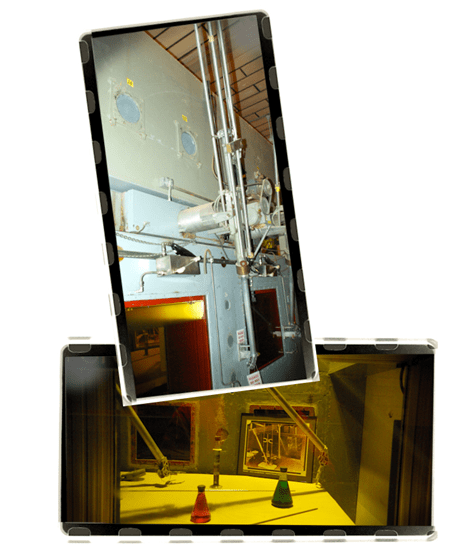
EBR1 was equipped with the world’s first “mechanical hand” manipulators in its hot cell. The hot cell was used for disassembling irradiated fuel and blanket elements and packaging the materials in shielded cask for shipment to an off-site laboratory.
Of the four manipulators that I saw, there, only one was operational. It was set up to allow visitors to use it to pick up and manipulate metal and wood items of various shapes, sizes and configurations. There were few other visitors, so I spent some time with it. While it was a challenge, I was able to manipulate some of the items with a moderate bit of finesse fairly quickly.
Having worked in nuclear power in the Navy and, then, commercial power plants – since I was 20 years old –, EBR1 is an interesting place for me, though I realize it’s not an attraction a lot of people would think of visiting. It’s also interesting to think that the first use of nuclear power to produce electricity occurred at EBR1 only about 6 weeks before I was born.


 Here’s a close-up cropped from the above image—————————->

![image_thumb[1]](https://i0.wp.com/exit78.com/wp-content/uploads//2010/09/image_thumb1_thumb.png?resize=154%2C117&ssl=1 "image_thumb[1]") Craters of the Moon to be continued…
Craters of the Moon to be continued…


![image_thumb[1]](https://i0.wp.com/exit78.com/wp-content/uploads//2010/09/image_thumb11.png?ssl=1 "image_thumb[1]")


 Of course modern wind turbines look much different than the 1.25 megawatt Grandpa’s Knob wind turbine that operated near Rutland, Vermont in 1941. In February, 1943, a main bearing failed and, due to the war, a replacement part took more than two years to manufacture and install. The wind turbine was restarted on March 3, 1945, but, later that month, a connector failure resulted in one of the 8 ton blades being tossed over 700 feet, where it landed on it’s tip. Tip replacement was not feasible because of the war effort. With the cost of coal generated electricity substantially the cost of electricity produced by the wind turbine, the project was dismantled.