Trail to Nymph and Dream Lakes

dream_lakeThis was our second time on this trail segment, which runs from the Bear Lake parking area to Emerald Lake and connects with other Bear Lake area trails.  We had hoped to make it to Emerald Lake if our legs, and the weather, held out.  The weather had been iffy overnight and during the morning.  Trail Ridge Road had been closed closed the night before and remained closed due to snow for the first time in the season. With rain threatening, instead of a hike that morning, we went into Estes Park.  After lunch and walking around Estes Park town center a bit more, we headed back into the park to the Bear Lake area trailhead.

The trail we chose goes to a trio of subalpine lakes – Nymph, Dream, and Emerald – in upper Tyndall Gorge.  The trail is well maintained and rises steadily over most of it’s 1.8 mile  length.  Difficulty is easy to moderate, but can be more difficult for those not acclimatized to the altitude as it climbs to over 10,000 feet.  We had already been in Colorado a week, so the altitude was less of an issue than it might have been otherwise.

tyndallFrom the Bear Lake area trails parking lot (9,475 ft.), the trail climbs steady for 1/2 mile, then levels off at about 9, 700 feet at the south end of  small, lily pad covered Nymph Lake.  The trail begins climbing again in the forest on the north end of Nymph Lake and levels off again at Dream Lake, 1.1 miles from the trail head and at an elevation of 9,912′ ft.  Dream Lake is .35 miles long.  The trail passes along its west shore.

We had hoped to make it all the way to Emerald Lake, 1.8 miles from the trailhead and 10,090 feet above sea level, but we turned back at the north end of Dream Lake due to deteriorating weather conditions.  Weather in the high country can be unpredictable, even in the middle of summer, but this was the middle of September and we’d already had some rain on our hike.  We had rain gear with us. However, it was already 3:30 PM and light rain was falling again, so we decided against pushing on ahead.


Blog posts from this visit to
Rocky  Mountain  National
 Park:

Selected Information
Resources:

Rocky Mountain National Park
Estes Park
Grand Lake
0 comments
None

New Island in the Red Sea.–Update.

The new red sea island is likely to be a permanent geological feature as the eruption has apparently risen higher than the surface of the water.

red_sea_volcano_new_island

From NASA’s Earth Observatory website :

This new satellite image, acquired January 7, 2012, suggests that the eruption has risen nearly completely above water. A plume of steam, other volcanic gases, and ash spews from a distinct cone. The land surrounding the vent has grown, and is now about 530 by 710 meters (1,700 by 2,300 feet) across. Once above water, past eruptions in the Zubair Islands were primarily effusive, with relatively runny lava forming thin lava flows. In contrast to the fragmented rock that forms when lava interacts directly with water, lava that solidifies on land is tough, so this new island is likely to stick around.

New Island
New Island Video

0 comments
None

Update on New Red Sea Island – video

There’s no super dramatic lava fountains or flows  in the video, just a view from a copter of new volcano that’s appearing out of the red sea. (previous post: New Island?)

0 comments
None

Estes Park

estes_park_streetOn our four previous visits to Rocky Mountain National Park, we stayed one or more nights in the adjacent town of Estes Park. This time, we didn’t, as we were able to get reservations at Moraine Park Campground in the park for the duration of our planned visit.  As a result, we actually spent less time in Estes Park than any other visit – other than traveling through town and stops for fuel and groceries, just a short visit before and after lunch on September 15th, followed by an afternoon alpine hike back in the park.  It was an nice stroll along the street and into some of the shops – and much less crowded than our last visit on Labor Day weekend, 2009.

estes_park

This image is from a photo Karen snapped of me
while I was taking a picture of the Wishful Thinkin
sculpture  of the cowboy pouring water out of
his boot.

Estes Park, a town of just under 6,000 permanent residents, is a popular summer resort in the Front Range of the Colorado Rockies, though there are plenty of recreational opportunities during the rest of the year. Located at 7,522 feet above sea level, the town is at the east entrance to Rocky Mountain National Park. Tourism has been a primary business for the town for most of its history.  Lodging includes The Stanley Hotel, inspiration for the setting of Stephen King’s novel The Shining.  (We stayed in the hotel during our 2001 visit.)

wishful_thinkin

The word “park” used in place names in the Colorado Rockies often refers to a valley or meadow. Estes Park, then, originally referred to the valley and was named after town founder Joel Estes.

The town experienced severe damage in July 1982 from flooding resulting from the failure of Lawn Lake Dam.

Additional information on the Lawn Lake Dam Failure, July 15, 1982:


Blog posts from this visit to
Rocky  Mountain  National
 Park:

Selected Information
Resources:

Rocky Mountain National Park
Estes Park
Grand Lake
0 comments
None

2012 – and the Mayans.

2012 - Only 354 days left until the end of...

Funny thing, I didn’t see anything in the last few days about the apocalyptic predictions for 2012, not that I really watched that much of the traditional media end-of-the-year lo0king back, looking forward tripe.

(Cartoon is from XKCD – A webcomic of romance, sarcasm, math, and language.)

0 comments
None

Forty Years Ago – Charting a New Course

navy_1972

(Continued from “Forty Years Ago–A Departure”.)

The flight from Houston had a short layover at Los Angeles International before continuing on to San Diego.  From there it was but a short trip to the San Diego Naval Training Center.


A few weeks earlier, I had ridden with a friend to the Manned Spacecraft Center, where he worked.  He was loaning me his car for the day so that I could look for a job.

Even though I had already had several jobs, I had very little experience at actually looking for a job and, looking back now, I really didn’t have a clue then on how to do it.  I basically spent the day driving around, eventually ending up in a shopping center in Baytown.

I really didn’t start the day even thinking about joining the military, but there I was, at a Texas strip mall that housed recruiting offices for Marine Corp, Army, Air Force and Navy.  With the ongoing Viet Nam conflict, the first two had absolutely no interest for me.  While I don’t remember much about it, my first stop was in the Air Force recruiter’s office.

The stop at the Navy recruiting office was more memorable.  The recruiter talked about a number of options, but there was one that really caught my attention, the Navy nuclear power program.  Not only did it offer interesting opportunities in the Navy, but the job experience gained might later lead to opportunities in civilian nuclear power.  The main drawback was it required a six year commitment instead of the more common two or four year enlistments.

In the ensuing weeks, I qualified for the program through the advanced programs test, passed a physical, and enlisted in the Navy with entry delayed until the end of December.

sign

One of the benefits of the program was that I would be entering the service at E3 pay grade,  a seaman – equivalent to a private first class – instead of seaman recruit (E1).  Completion of recruit training would bring automatic promotion to Petty Officer Third Class, equivalent to corporal.

Three different job fields were included in the program: electronics, mechanical, and electrical.  I hoped for electronics, but I wasn’t going to learn which field I was going to be in until after further testing in boot camp.  Of course, electronics was what most of those who enter the program hoped for and not everyone could get it.

January 1, 1972 was a holiday, of course, so there was no processing of the new recruits.  Instead, we got to watch football games in the receiving and outfitting transient barracks.

0 comments
None

Forty Years Ago–A Departure.

(Continued from “Forty Years Ago.”)

image

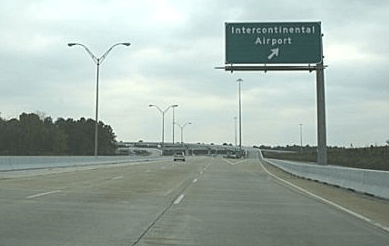
The new Houston Intercontinental Airport had opened less than two years before and, at the end of 1971, I was there for my first flight on an airplane.  By the end of the day, I was going to be far away from Houston, far away from anyone I knew.

There were several of us flying standby that day.  In those days, flights often flew at less than capacity and still made money.  There was little concern that I wouldn’t make the flight, of course, I wouldn’t  know until it was time to board.

After all of the regular ticketed passengers had boarded, the ticket agent started to call for the standby passengers.  I was pleasantly surprised to end up in first class, the one and only time that’s ever happened.

The food in first class was excellent and the drinks were free.  I was quite surprised with the shish kabob, though, which I had never had.  Along with the more familiar beef and veggies on the skewer were mushrooms, which I didn’t discover until I bit into one.  The taste and consistency were not at all familiar and I didn’t care for it.  While today I do eat meals with mushrooms in them, mushrooms are far from a favorite.

While the flight wasn’t a direct flight, I didn’t have to change planes when we landed at an intermediate stop in another large airport.

One more takeoff and landing before arrival.

0 comments
None

Forty Years Ago

mike_1971
Houston, Texas 1971
Photo taken at employment
application to H.P.D.

I was 19 years old, almost 20, single and still living at home with my mom.

I didn’t have a job nor any experience to speak of to put on a job application.

Without a reliable vehicle, public transportation didn’t extend out to where we lived, making finding a job difficult — and I wanted a job where I could gain experience for the future.

College hadn’t worked out, partially because of the transportation issue.

1972 was going to start out very, very different.

0 comments
None

New Island?

UPDATE – see recent video here.

This month, a new island apparently has emerged from the waters of the Red Sea.  On December 19, fisherman witnessed lava fountains rising as high as 90 feet above the water.  Comparison of October 23 2007 (left) and December 23, 2011 images from NASA’s EO-1 satellite show what appears to be a new island.

new_island

The new island may not last long if it compose primarily from volcanic debris, which would erode more rapidly from wave action than solidified magma would.

0 comments
None

Trail Ridge High Country

marmotRocky Mountain National Park’s Trail Ridge Road (Wikipedia) crosses the park from Estes Park on the east to Grand Lake on the west. It is a segment of U.S. Highway 34 and is the highest continuous highway in the United States.  Crossing the Continental Divide at Milner Pass ((elev. 10,758 ft/3,279 m), it reaches its highest point at 12,183 ft (3,713 m), near Fall River Pass.

On this visit, the day we crossed on Trail Ridge Road to Grand Lake and back started out cool, with precipitation predicted.  We ran into a little rain and quite a bit of fog, some of which rolled in when we were on the Tundra Communities Trail, which climbs a couple hundred feet, starting at about 12, 100 ft. elevation.

On the way back to the campground, we stopped at the gift shop next to Alpine Visitor Center – at Fall Creek Pass – at a little after 3 PM to take a break from the fog and get a cup of coffee. However, the gift shop was closed, as was the visitor center.  The temperature had dropped from the mid 50s when we were there earlier in the day to 35°F.

About three hours after we made it back to the camper, the park service closed the road.

Blog posts from this visit to
Rocky  Mountain  National
 Park:

Selected Information
Resources:

Rocky Mountain National Park
Estes Park
Grand Lake
0 comments
None