
Originally posted March 15, 2009. Updated November 6, 2014
[continue reading…]
Originally posted March 15, 2009. Updated November 6, 2014
[continue reading…]
“Reports from Norway say that the Gulf stream is very warm this year and that it is rapidly melting the ice out of the Arctic ocean. The climate of Norway is growing mild, and northern Russia is ice-free. The Arctic ocean is melted free of ice for 700 miles north of Norway, a thing hitherto unheard of.” The Chicago Tribune, November 4, 1922.


I’m not sure what kind of plant this is, but it made for an interesting photo from the trail
Seven Hollows Trail
Petit Jean State Park
Which of the following two statements is true?
There are two apparently competing claims of what is happening to global temperature. The more common claim is that recent years have been the warmest. This is often used by those who say that global temperatures are rising primarily due to the effects of increased concentrations of carbon dioxide produced by man in the Earth’s atmosphere. Others, who see global temperatures as more impacted by solar influences, say that global temperature trends for the last several years have stopped rising and, in fact, have been dropping.
So, back to the question; which of the statements is true?
Actually, it appears that both are true.
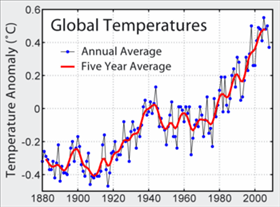
The 10 warmest years on record have all occurred between 1997 and 2008
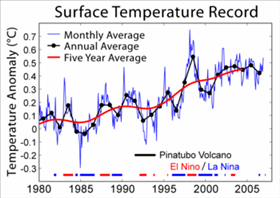
there has been no significant rise in global surface temperature since 1998.
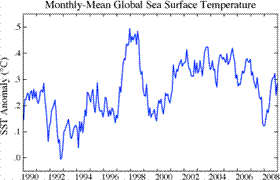
On each figure, temperature anomaly is the departure in temperature from the 1951 – 1980 base period averaged global temperature. With solar activity continuing to be very low, what will be the trend of future global temperature?
February 28, 2009 Hot or Not Hot

February 27, 2009 — Watching the evening news, it sometimes appears as though the recession continues to spiral downward toward a mini-depression, if not worse.
Store closures.
Massive layoffs.
Stocks indexes dropping to levels not seen in over a decade.
Bankruptcies.
Reductions in services.
Nonexistent availability of credit.
Continuing high rates of foreclosures and dropping home prices.
We live in an area that has seemed almost recession proof in all of the economic downturns since we moved here in 1980. Yet, even here, there are empty stores as well as layoffs, foreclosures and higher unemployment. On the other hand, there are new homes being built, businesses that are adding on or building new, and a few help wanted signs.
Most of the people we know, both here and elsewhere, are weathering the storm fairly well, though not all. Quite a few people, including two of my brothers-in-law will have to postpone retirement because of losses in their savings and a nephew employed by Circuit City has lost his job.
So far, we have not been impacted, though we have changed some of our spending habits. In these trying times, it seems better to be frugal and conserve what we have — just in case.
How are things in your area? Have you made adjustments because of the economy?
Store Closing photo from flickr, by dpicker,  creative commons licensing
 At present, the primary tools used by scientists and policy makers for predicting climate change are computer models, generally the global warming projections used by the United Nations Intergovernmental Panel on Climate Change (IPCC). According to some sources, global average temperatures have not risen since 1998 and warming may not resume until some time in the next decade. NONE of the IPCC models has a 20 year period of little or no warming.
As with anything based on computer models, projection results are subject to the accuracy of the input data provided to model and the validity of the assumptions used in the modeling.
On February 12, 2009 Dr. Patrick J. Michaels testified at a U.S. House subcommittee hearing, “The Climate Crisis: National Security, Public Health, and Economic Threats.”
Dr. Michaels explained, “The answers to the important questions about the implications of climate change are driven by a series of computer models and mathematical simulations.” He subsequently stated, “I must report that our models are in the process of failing.”
With each post, I link to videos, news, and/or other material that I have read or viewed associated with climate change.
Prepared text for Congressional Hearing:
Papers:
News:


